Remember when cars were only for travel? In 2025, things have changed. Now, your car is more like a smart assistant – it helps you drive, stay safe, talk to you, and even entertain you. In a country like India, where daily travel varies so much, connected cars India are no longer just a fancy upgrade – they’re becoming essential for a smarter, safer, and more fun driving experience.
This isn’t about the future – it’s already happening. Thanks to better mobile networks, 5G, and more tech-savvy car buyers, India is moving fast toward smart mobility. Cars today are packed with features that make travel smoother, safer, and more connected than ever before.
What Are Connected Cars?
A connected car is a vehicle that connects to the internet and other devices. Imagine your smartphone on wheels – that’s a connected car. It uses telematics in Indian cars, sensors, and smart software to talk to apps, other cars, and even traffic systems.
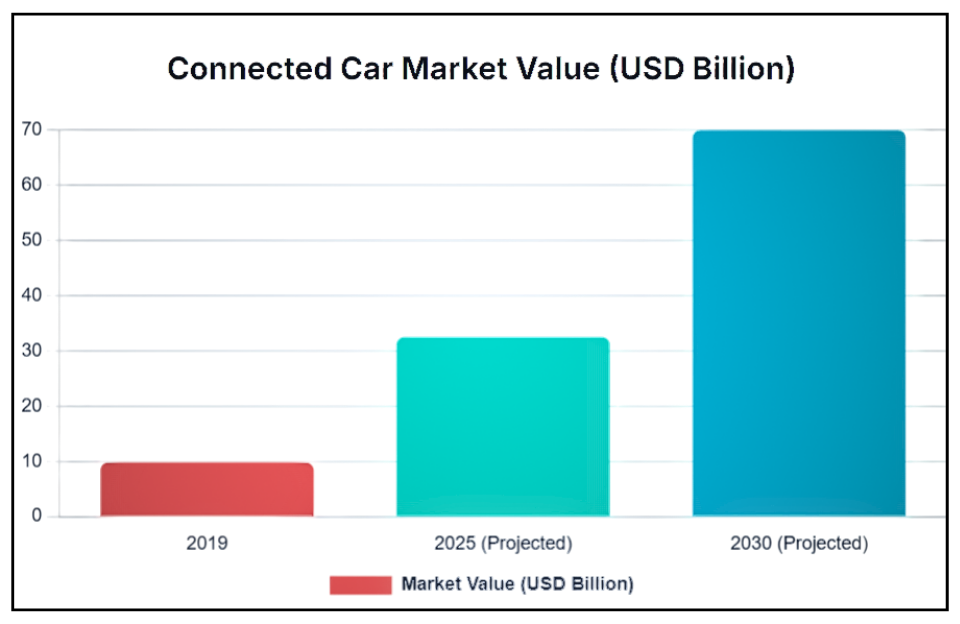
Thanks to better internet and smartphones in India, more people are choosing smart cars. According to experts, the India connected car market may grow to USD 32.5 billion by 2025. By the end of 2024, more than 35% of new cars in India may have built-in internet features. This shows just how fast we’re heading into a smart driving future.
Smart Car Features India Loves: How AI Powers Today’s Cars
At the center of smart cars is automotive AI in India. This smart tech helps your car learn and respond to your needs.
Here’s how AI in Indian automotive industry is making driving better:
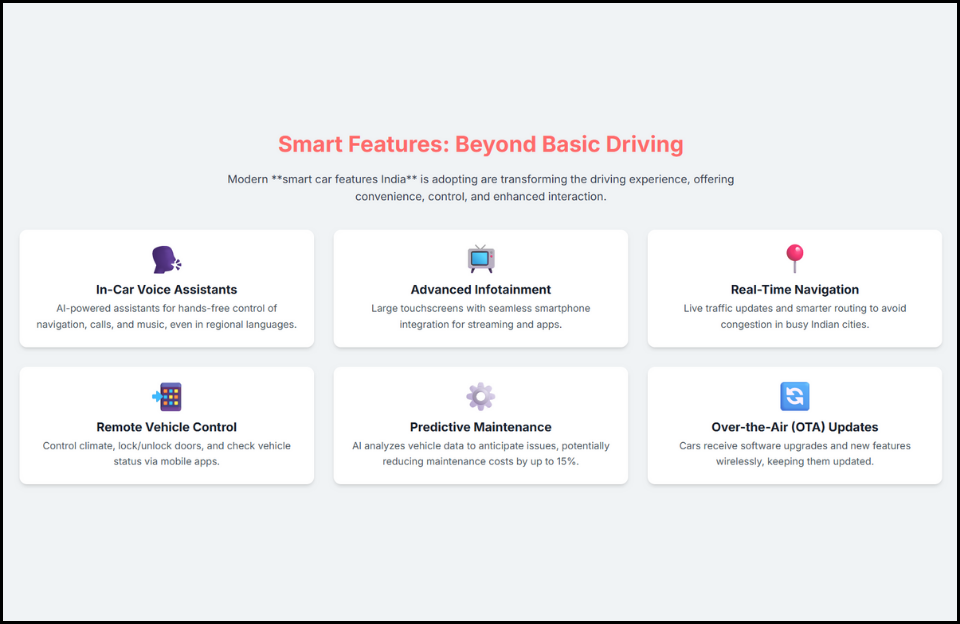
- Voice Commands: Just talk to your car to play music, make calls, or get directions. Brands like MG Motor i-SMART even understand regional Indian languages.
- Predictive Maintenance Cars India: Your car can warn you before something goes wrong, like low oil or battery issues. This can cut repair costs by up to 15%.
- Personalized Experience: Your car remembers your favorite settings like A/C temperature, music, and driving style.
- Smart Navigation: Cars use real-time traffic info to avoid jams and get you to your destination faster.
These cars are also becoming Software-Defined Vehicles (SDVs). That means car companies can add new features anytime through Over-the-Air (OTA) updates – just like your phone gets app updates.
Fun on the Go: Car Infotainment Systems
Long trips and traffic jams can be boring. That’s why car infotainment systems are getting smarter and more fun.
Today’s in-car entertainment trends India includes:
- Large Touch Screens: Easy to use and connected with Apple CarPlay or Android Auto.
- Streaming Music & Podcasts: Listen to your favorite tunes or shows while driving.
- Smart Maps: Get live traffic updates, parking suggestions, and better routes.
- Remote Car Features India: With an app, you can check your fuel level, turn on the A/C, or lock the car – all from your phone.
These features make your ride more enjoyable, whether you’re in traffic or on a road trip
Safety First: ADAS Features India Is Adopting
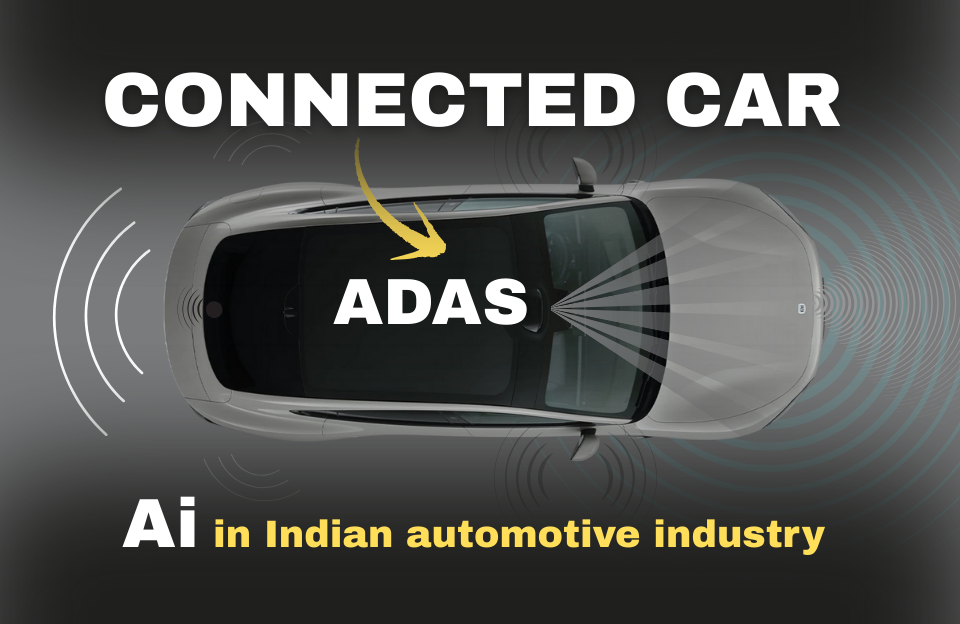
The biggest benefit of connected cars is better safety. Today’s advanced safety features in cars India is seeing are changing how we stay protected on the road.
Important ADAS features India includes:
- Automatic Emergency Braking (AEB): The car brakes automatically if it senses a crash ahead – reducing accident chances by up to 50%.
- Lane Keep Assist (LKA): Alerts you if you start drifting out of your lane and gently steers you back.
- Adaptive Cruise Control: Keeps a safe distance from the car in front – great for highway drives.
- Blind Spot Monitor: Warns you when vehicles are in your blind spot before you switch lanes.
- Emergency SOS: If there’s an accident, the car can send your location to emergency teams.
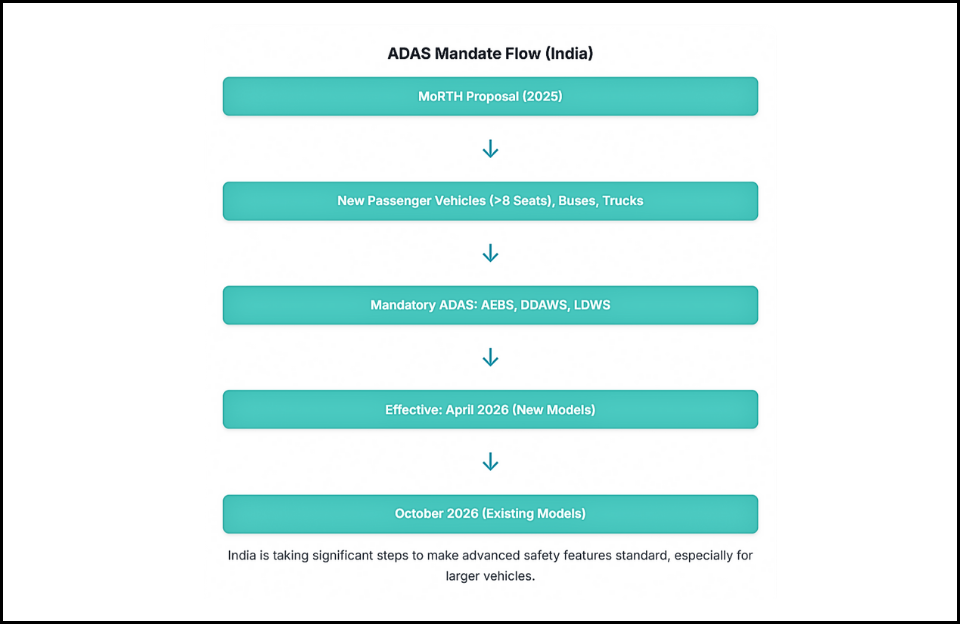
From April 2026, the Indian government will require buses, trucks, and some new vehicles to have automatic braking, drowsiness alerts, and lane warnings – a big step for road safety India.
Your Data, Your Control: What About Privacy?
With so many features, connected cars also collect a lot of data – where you go, how you drive, your voice commands, and more. That’s where vehicle data privacy concerns India come in.
Currently, there is no India-specific law for vehicle data. But the Digital Personal Data Protection Act, 2023 (DPDP Act) provides some basic rules.
Key concerns include:
- Who Owns the Data? It’s still unclear who controls this information – the user or the carmaker?
- Global Storage: Some data may be sent abroad since many car companies use international tech.
- Opt-Out Options: Some systems collect data without easy ways to stop it.
To solve this, companies need to be honest, offer clear privacy settings, and protect users from hacking. Drivers should also get a control panel to manage what data they want to share.
The Future of Connected Cars India
There’s a lot to look forward to in the future of connected cars India. Here’s what’s next:
- V2X Communication India: Cars will “talk” to other cars, traffic lights, roads, and even people. This helps prevent accidents and manage traffic better.
- Hydrogen Cars: While EVs are popular, India is testing hydrogen fuel cell vehicles (HFCVs), especially for trucks and buses.
- Used Smart EVs: As more smart EVs hit the road, the second-hand market will grow, making them more affordable.
- Smarter AI: In future, AI will get even better – learning how to drive in Indian road conditions and offering ultra-personal driving features.
With help from Hyundai Bluelink, Tata ZConnect, Mahindra AdrenoX, and support from NITI Aayog, India’s automotive technology space is evolving fast.
Conclusion: Smarter, Safer, Smoother Drives Ahead
Connected car technology benefits India in many ways – it helps us drive smarter, stay safe, save money, and enjoy the journey more. From voice assistants to emergency braking and fun infotainment systems, smart cars are here to stay.
As more vehicles become connected car technology India showcases, the way we commute is being rewritten. The road ahead is exciting – with more tech, more safety, and more comfort. This is just the beginning of a new chapter in Indian mobility.